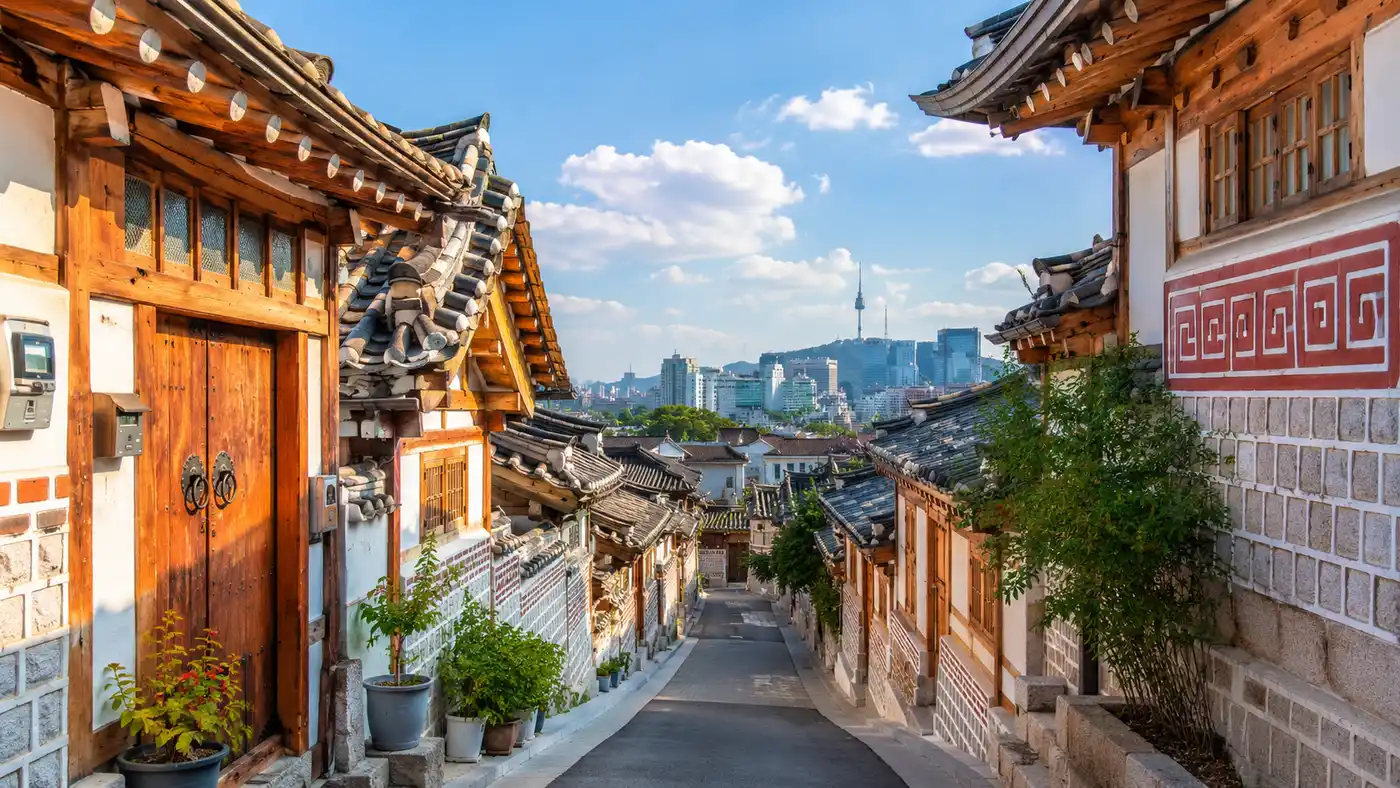
Best Restaurants, Cafes & Hotels in Bukchon Hanok Village
Discover the best bukchon hanok village restaurants, charming cafes, and unique hanok stays. Find authentic food and …
Continue Reading →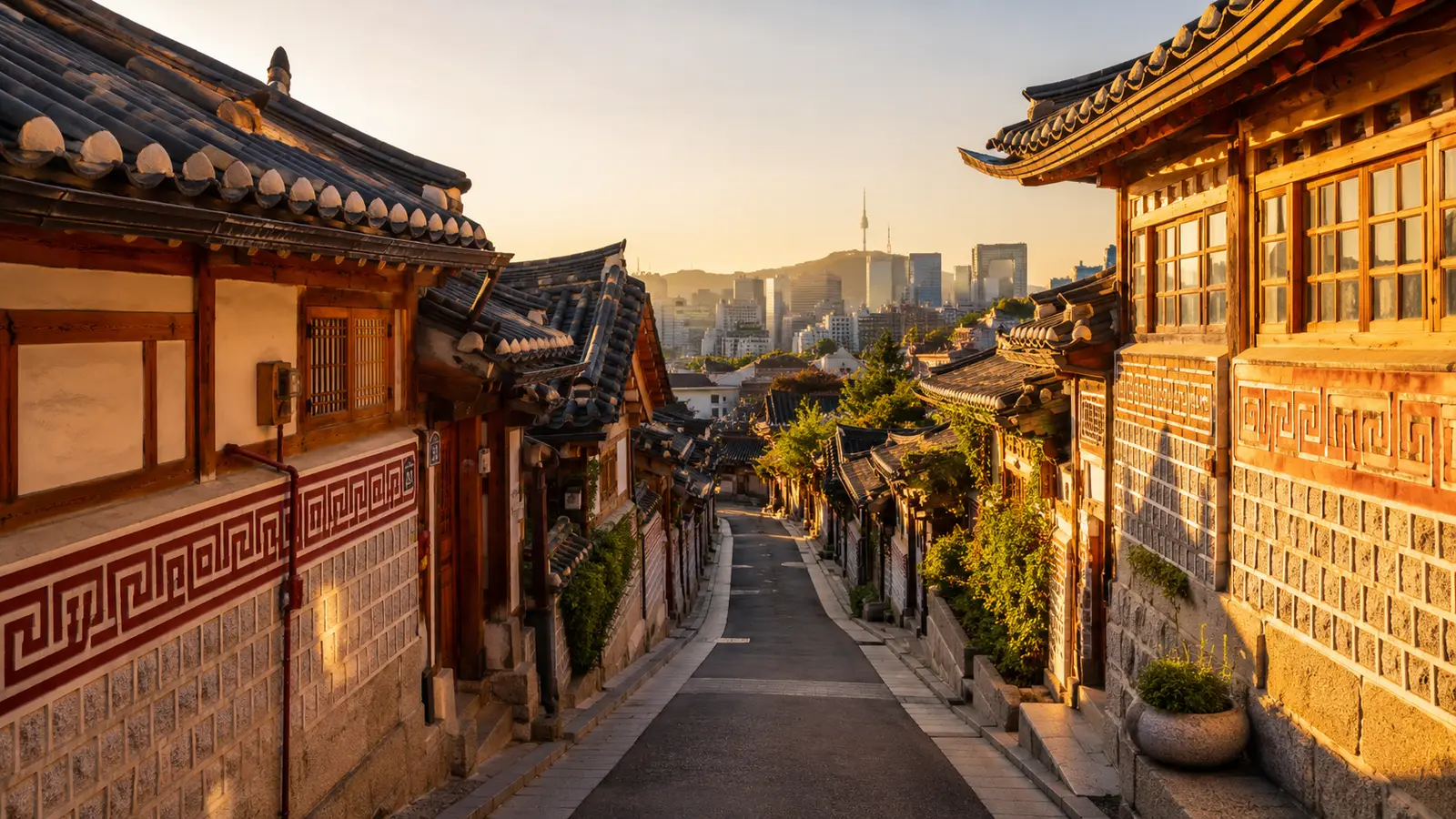
Step back 600 years into a beautifully preserved Joseon Dynasty neighborhood. Wander narrow alleys, discover artisan studios, and soak in timeless Korean culture.
Discover what makes bukchon hanok village unforgettable.
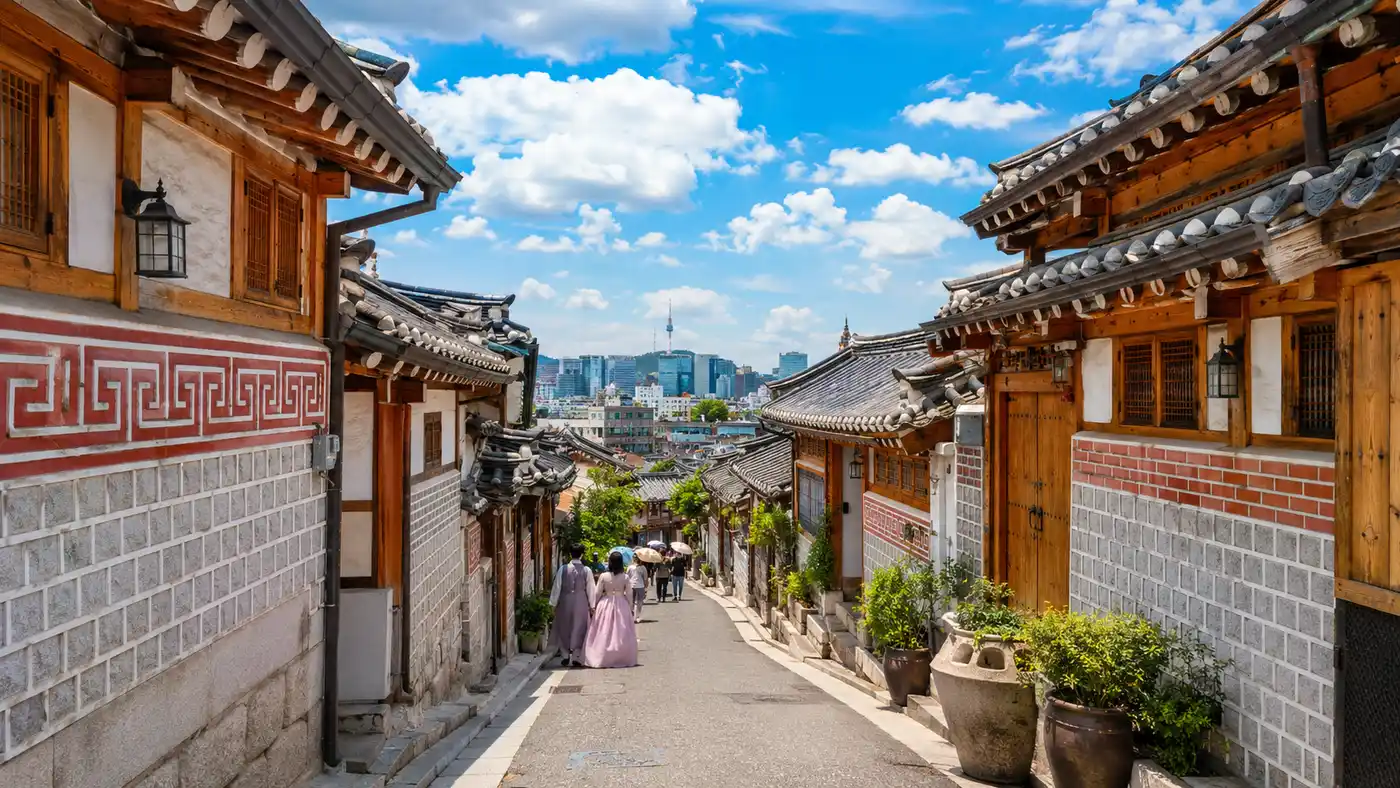
Wander through a labyrinth of narrow streets, each turn revealing hidden courtyards or a new vantage point. Maps are helpful, yet getting a little lost is part of the charm here.
Learn more →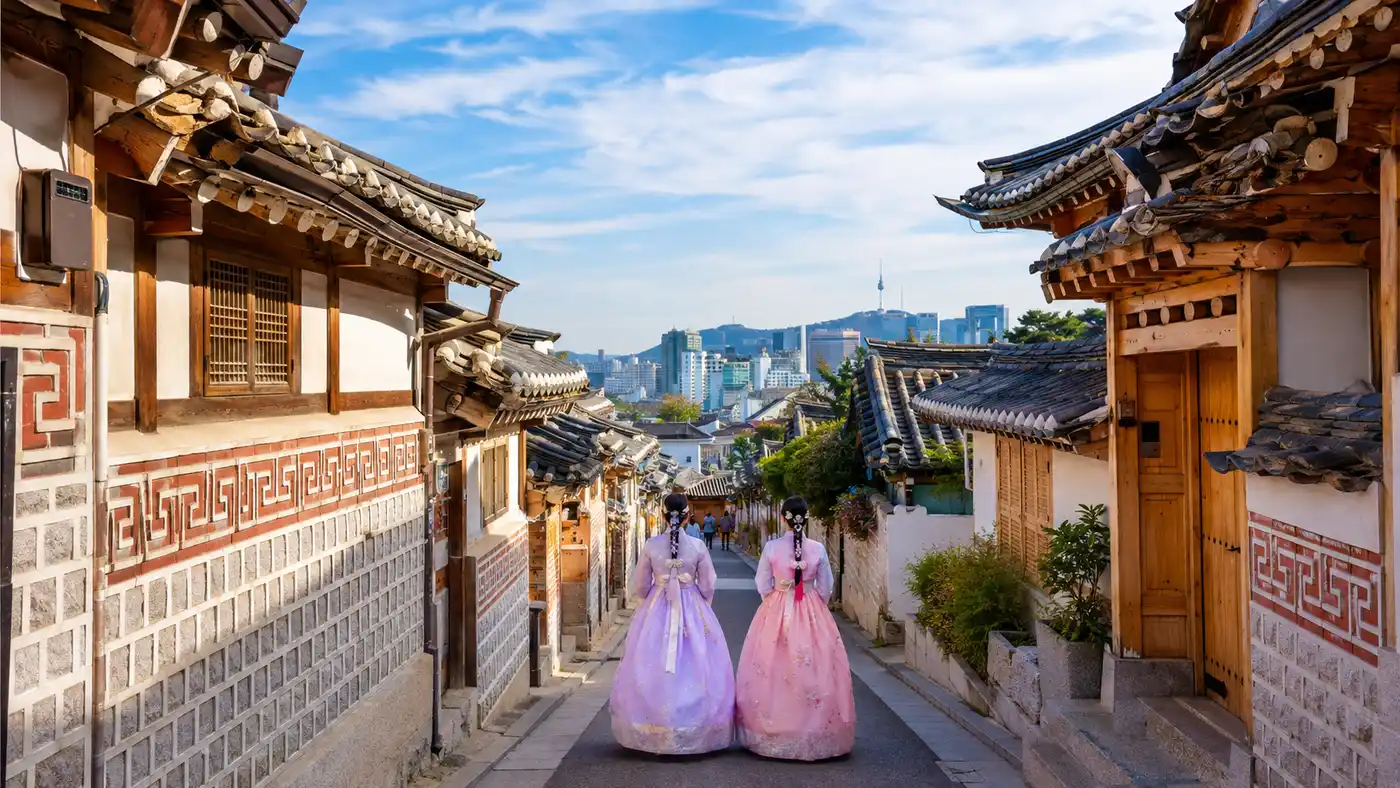
Pop into a traditional craft workshop or a small gallery showcasing local artists. Many hanoks now house studios where you can see artisans at work, creating pottery or intricate textiles.
Learn more →
Find a quiet traditional teahouse nestled amongst the homes. Enjoy a calming cup of Korean tea and traditional snacks, a perfect pause from your exploration.
Learn more →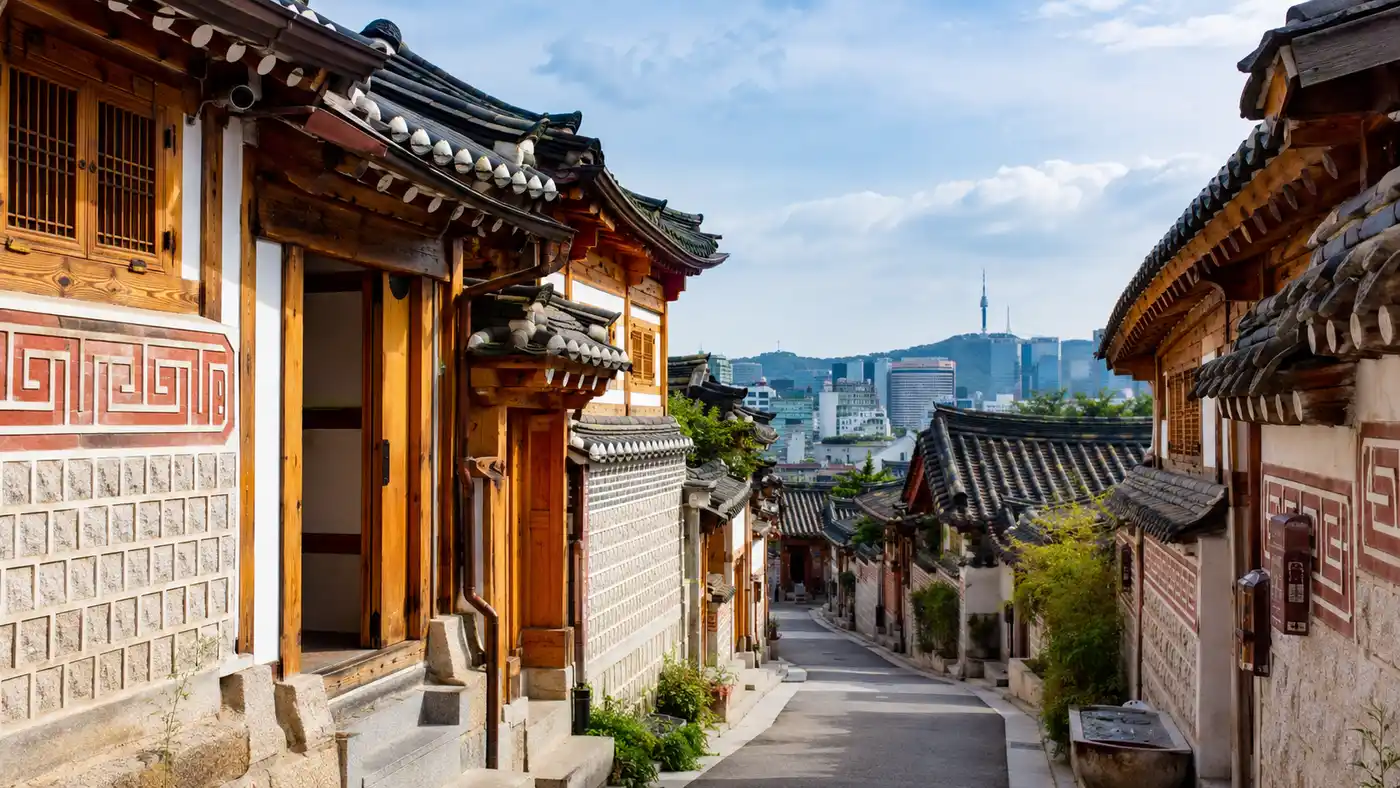
Climb to one of the village's famous eight scenic spots for breathtaking panoramic views. You will see ancient hanok rooftops juxtaposed against the modern city skyscrapers and Namsan Tower.
Learn more →What to expect from arrival to departure.
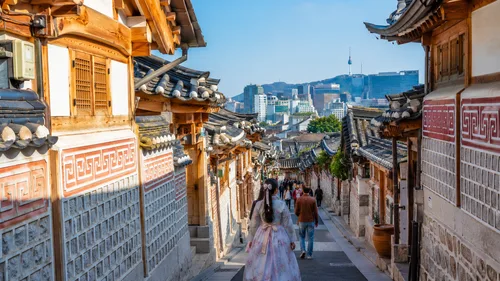
Take Seoul Subway Line 3 to Anguk Station. Use Exit 2, which puts you right at the village's edge.
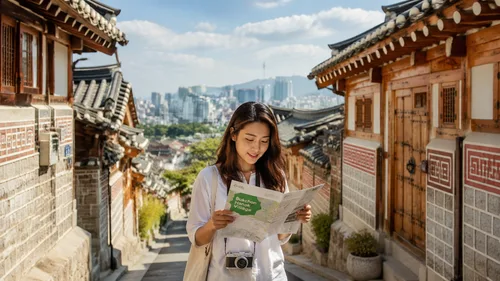
Look for the tourist information booth near the station exit. Pick up a free map, it helps navigate the winding lanes.
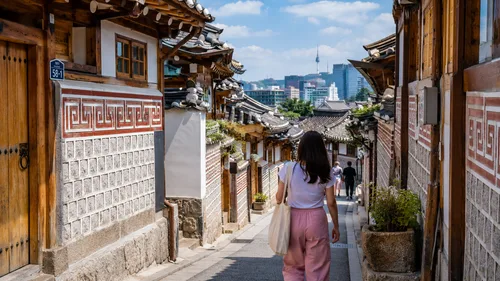
Start your exploration by simply walking the historic streets. Let yourself get pleasantly lost among the traditional hanok homes.
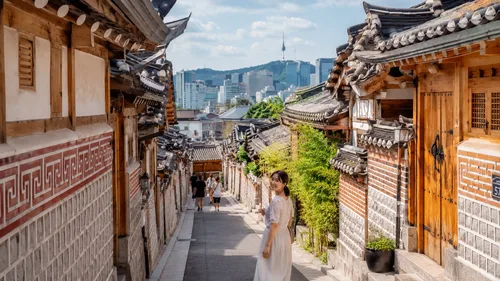
Seek out one of the 'Eight Scenic Spots' for incredible views over the village rooftops and the city beyond. The views from Gahoe-dong are particularly stunning.
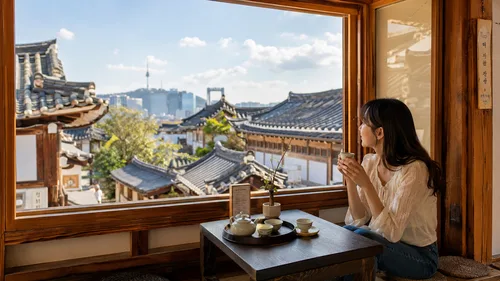
Pause for refreshment at a traditional teahouse. It's a peaceful way to experience Korean hospitality and culture.
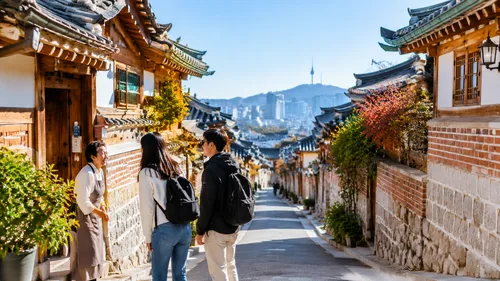
Remember this is a living neighborhood. Keep voices low, especially near homes, and respect private property as you explore.
Nestled between the grand palaces of Gyeongbokgung and Changdeokgung, Bukchon Hanok Village offers a rare glimpse into Seoul's rich past. This isn't a museum village, but a truly living neighborhood where residents still inhabit these beautifully preserved traditional Korean homes, or 'hanoks'. Walking its winding, hilly streets feels like stepping onto a film set, yet the authenticity is palpable, revealing layers of history with every turn.
The village's charm lies in its intricate network of alleyways, each leading to unexpected courtyards, artisan workshops, or breathtaking viewpoints overlooking the city. You'll find yourself captivated by the intricate tiled roofs, the sturdy wooden beams, and the serene beauty of the traditional architecture. It's a place where the past isn't just remembered, it's actively lived, offering a quiet counterpoint to Seoul's bustling modernity.
Come explore a place where time seems to slow down. Discover hidden teahouses, browse unique craft shops, and witness the enduring spirit of Korean heritage. Bukchon is more than just a destination; it's an experience, a journey into the soul of an ancient city that continues to thrive.
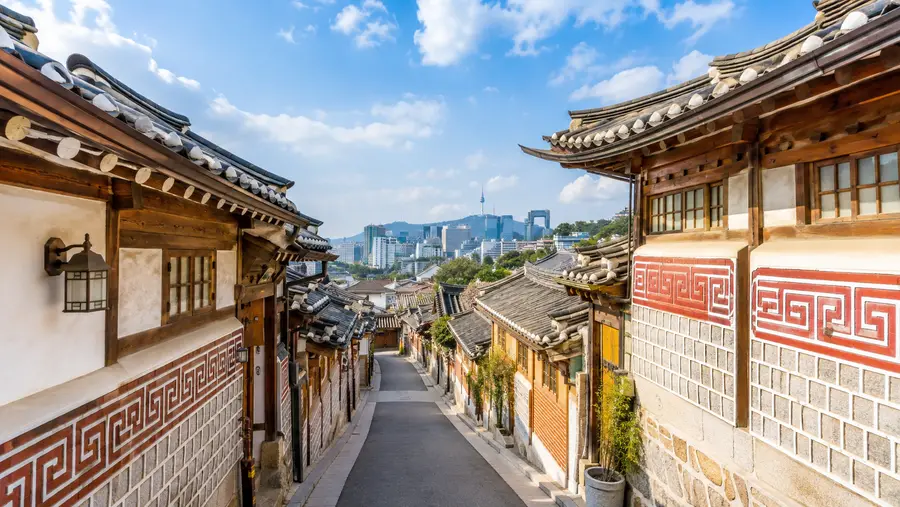
I've lived in Seoul for years, but a walk through Bukchon always feels like a mini-vacation. The quiet early mornings are just perfect for photography.
The views from the top were absolutely stunning, seeing the old roofs against the modern city. Finding that little tea shop was a real highlight, too.
It was beautiful, but a bit crowded in the afternoon. Still, the architecture is amazing, and I loved finding the hidden alleyways.
Such a unique place. It's incredible how people still live there. I bought a beautiful handmade ceramic piece from a small studio, a perfect souvenir.
Compare options and book directly below.
Everything you need to know before visiting bukchon hanok village.
Hours: Residential areas with restricted visiting hours: 10:00 AM to 5:00 PM daily. Fines apply for visiting outside these hours. The Bukchon Traditional Culture Center operates Tuesday – Friday: 9:00 AM ~ 6:00 PM; Saturday – Sunday: 9:00 AM ~ 5:00 PM.
| Entry to Bukchon Hanok Village is free. Some cultural workshops or specific house museums within the village may have small individual entry fees (2,000 to 5,000 KRW). |
📍 37 Gyedong-gil, Jongno-gu, Seoul, South Korea
See it before you go.
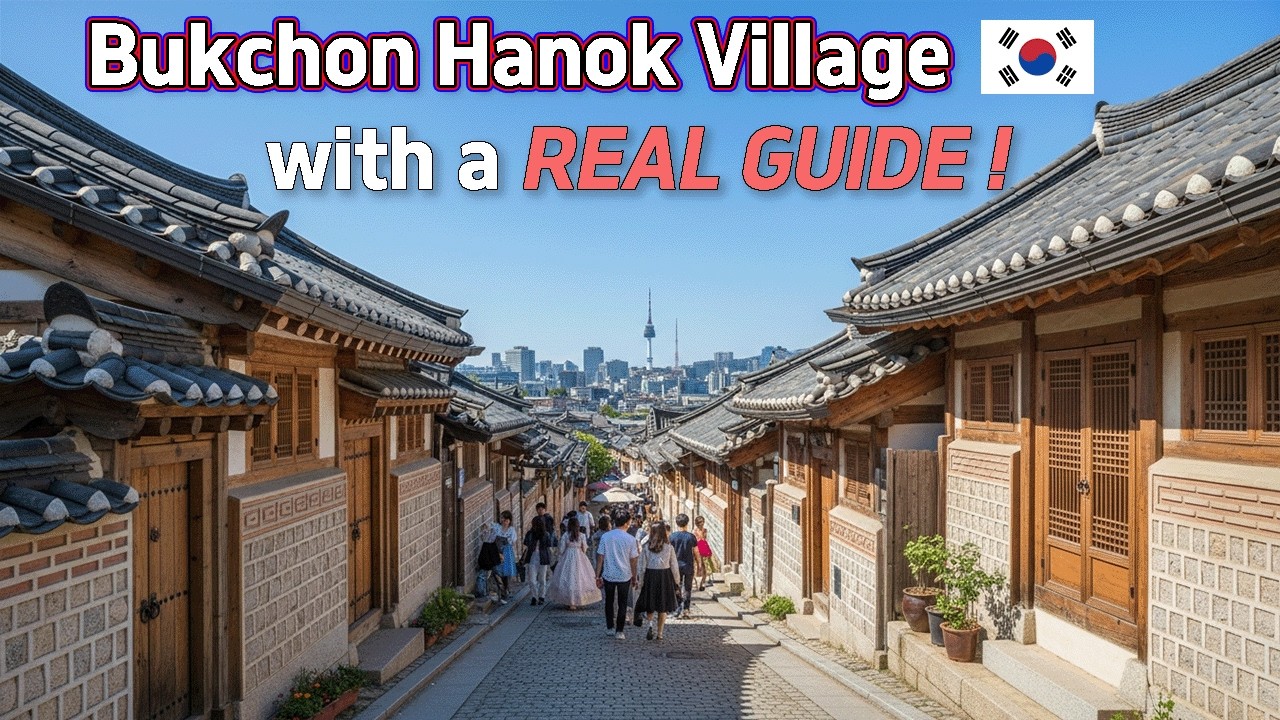
Worth combining with your bukchon hanok village visit.
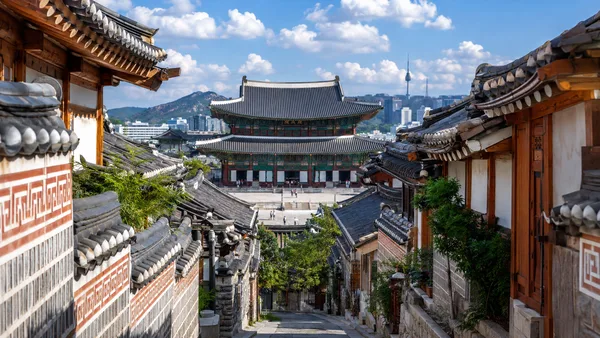
Explore Korea's grandest royal palace, a stunning example of Joseon architecture.
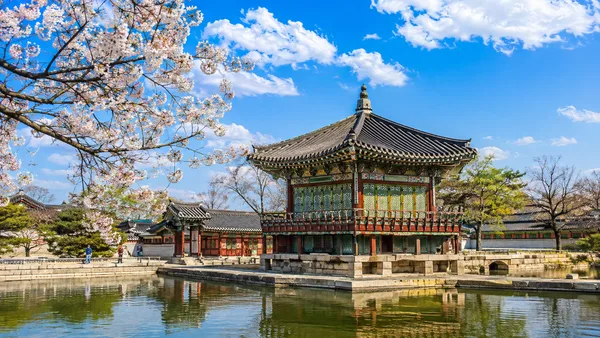
Visit this UNESCO World Heritage site, famous for its secret garden.
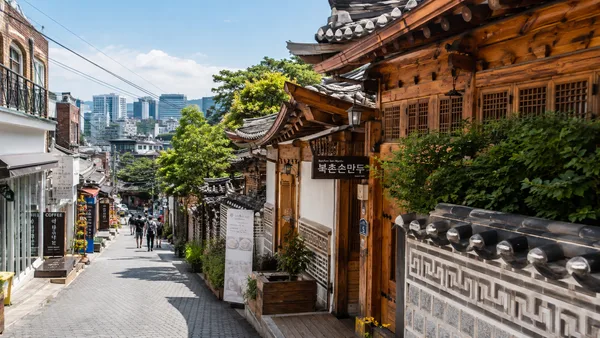
A trendy street filled with art galleries, cafes, and boutiques.
Bukchon Hanok Village welcomes all visitors with accessibility features and family-friendly amenities.
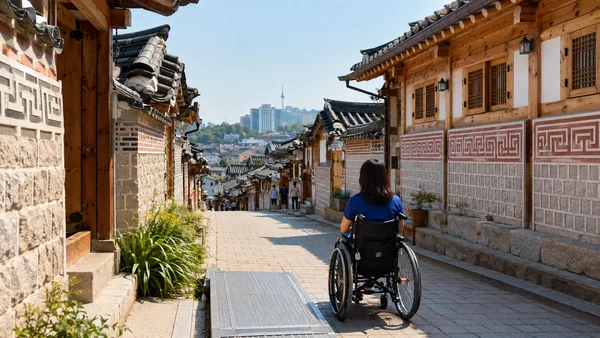
The village is steeply sloped and hilly, making it best navigated with a powered wheelchair; manual wheelchair users may require assistance. The main movement routes and alleys are maintained for wheelchair users, and the road surface is generally flat, though the village is on a hill. The approach from Anguk Station is considered the gentlest route. Accessible restrooms are available in the Gahoe-dong Community Service Center, Bukchon Binkwan, and the Bukchon Traditional Culture Center.
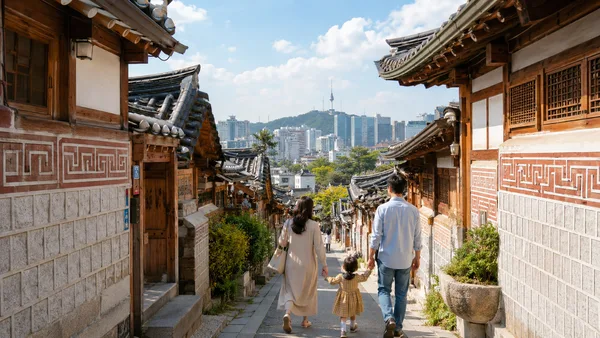
The main street, Bukchon-ro, is paved, wide, and smooth, making it stroller-friendly. However, many side alleys are steep, narrow, and have steps or uneven stones, where a baby carrier is recommended over a stroller. Some uphill hanok lanes are considered doable with a stroller at a slower pace. Diaper changing stations are available in the accessible restrooms of Bukchon Binkwan and the Bukchon Traditional Culture Center.
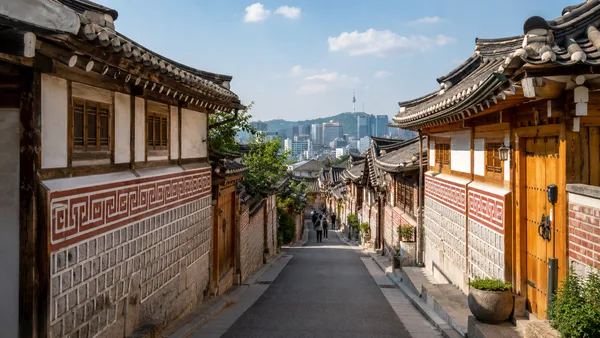
Tourist information centers offer maps and assistance in multiple languages. Many shops and cafes have English-speaking staff.
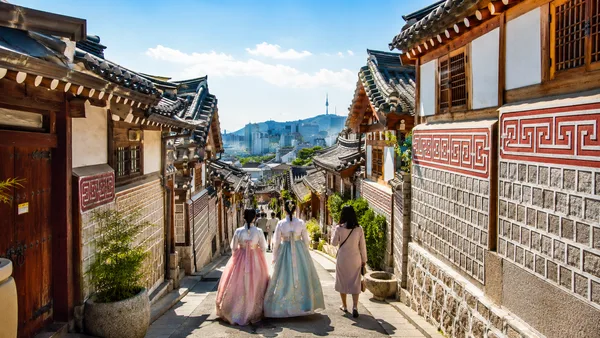
The village features many slopes and stairways, including stone steps that are part of the 'Eight Scenic Views of Bukchon'. There are no general elevators for navigating the village itself, but the Seoul Metro system, which provides access to the area, has elevators at most stations.
Dive deeper into bukchon hanok village.
Discover the best bukchon hanok village restaurants, charming cafes, and unique hanok stays. Find authentic food and …
Continue Reading →
Plan your perfect bukchon hanok village itinerary, exploring palaces like Gyeongbokgung and Changdeokgung, then heading …
Continue Reading →
Discover how to get to Bukchon Hanok Village with our complete guide, including maps, hours, best times to visit, and …
Continue Reading →
Discover the best things to do in Bukchon Hanok Village, from hanbok rental and photo spots to cultural centers and …
Continue Reading →Common questions about bukchon hanok village.
No, exploring the village alleys and public areas is completely free. Some private museums or workshops might charge a small fee.
Most visitors spend between 2-3 hours wandering the main areas. If you plan to visit specific shops or teahouses, allow for 4-5 hours.
Bukchon is a living residential area, offering an authentic, lived-in feel. Namsangol is a reconstructed village, more like an open-air museum with scheduled cultural performances.
Public restrooms are available at the tourist information centers and some larger cafes. Look for signs, as they aren't on every corner.
Yes, several traditional hanok guesthouses offer overnight stays. Booking well in advance is highly recommended, especially during peak seasons.
The easiest way is by subway to Anguk Station (Line 3), Exit 2. From there, it's a short walk into the village.
No, flying drones within the village is generally prohibited to protect the privacy of residents and the historical structures. Please respect this rule.
Bukchon is a residential area, so visitors are asked to keep voices low and avoid loud activities between 10 PM and 7 AM to respect the residents' peace.
Uncover the magic of Seoul's past. Start exploring our detailed guides and itineraries today.